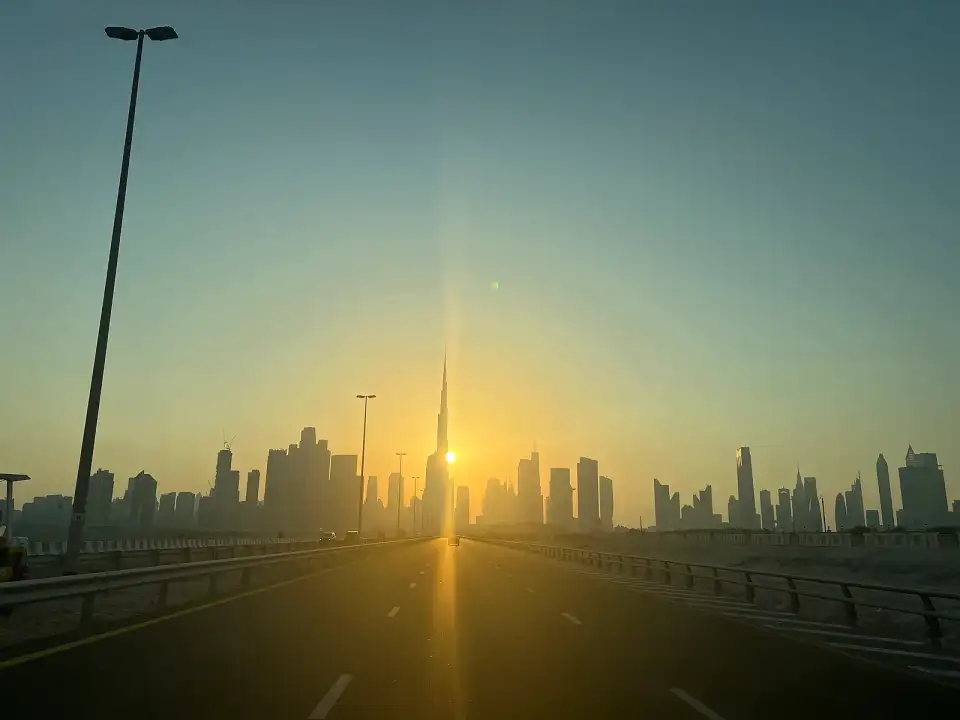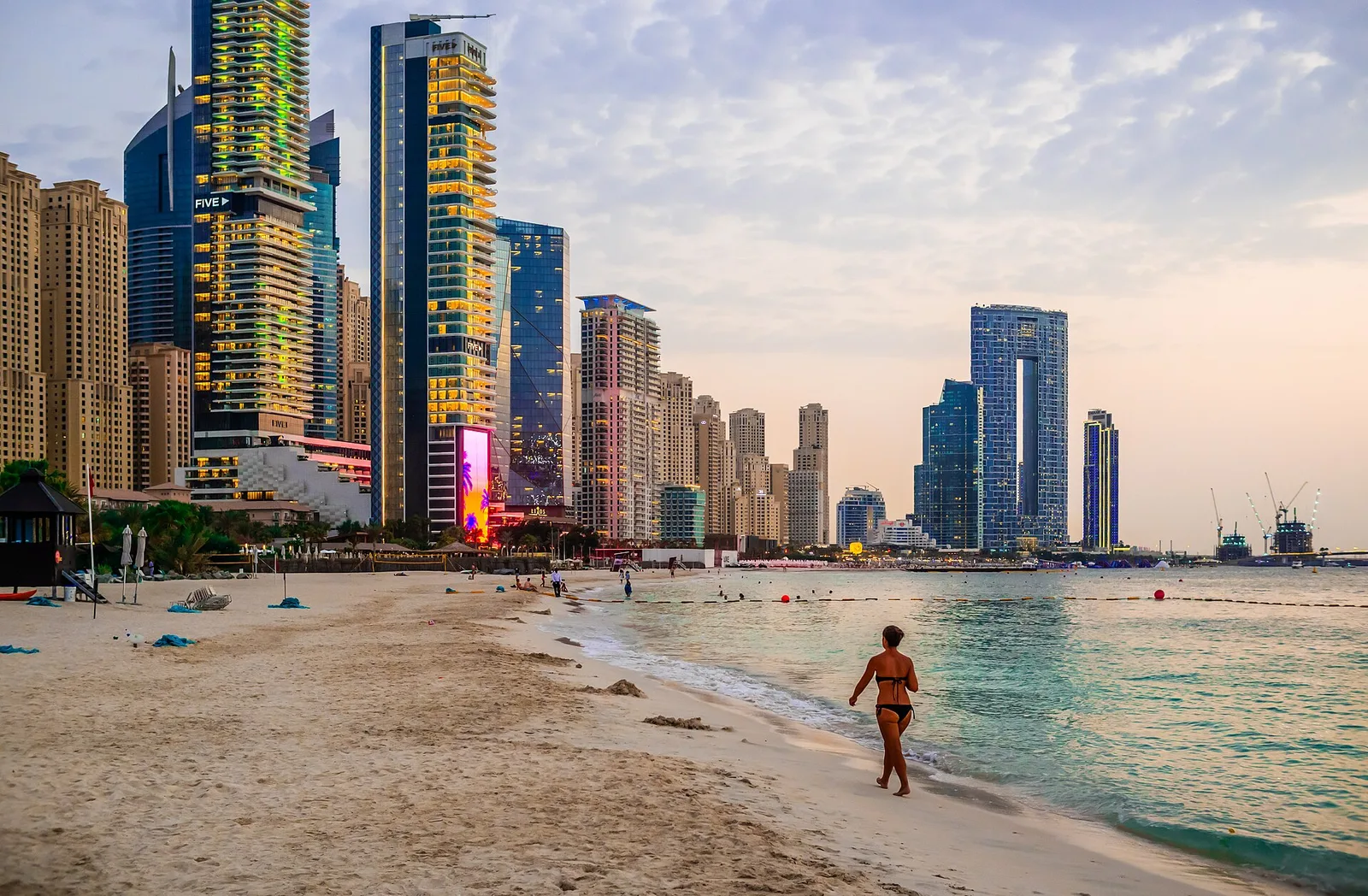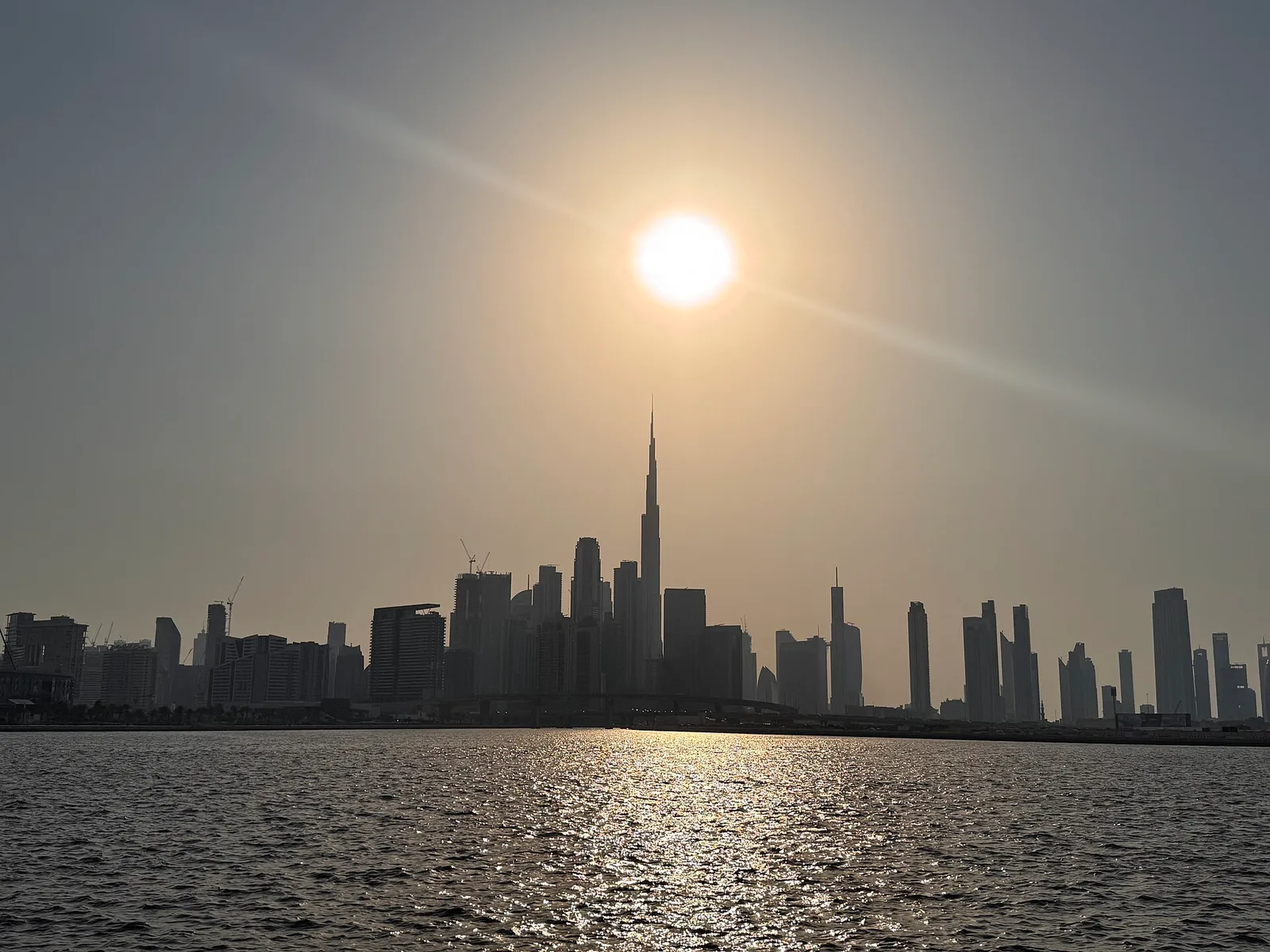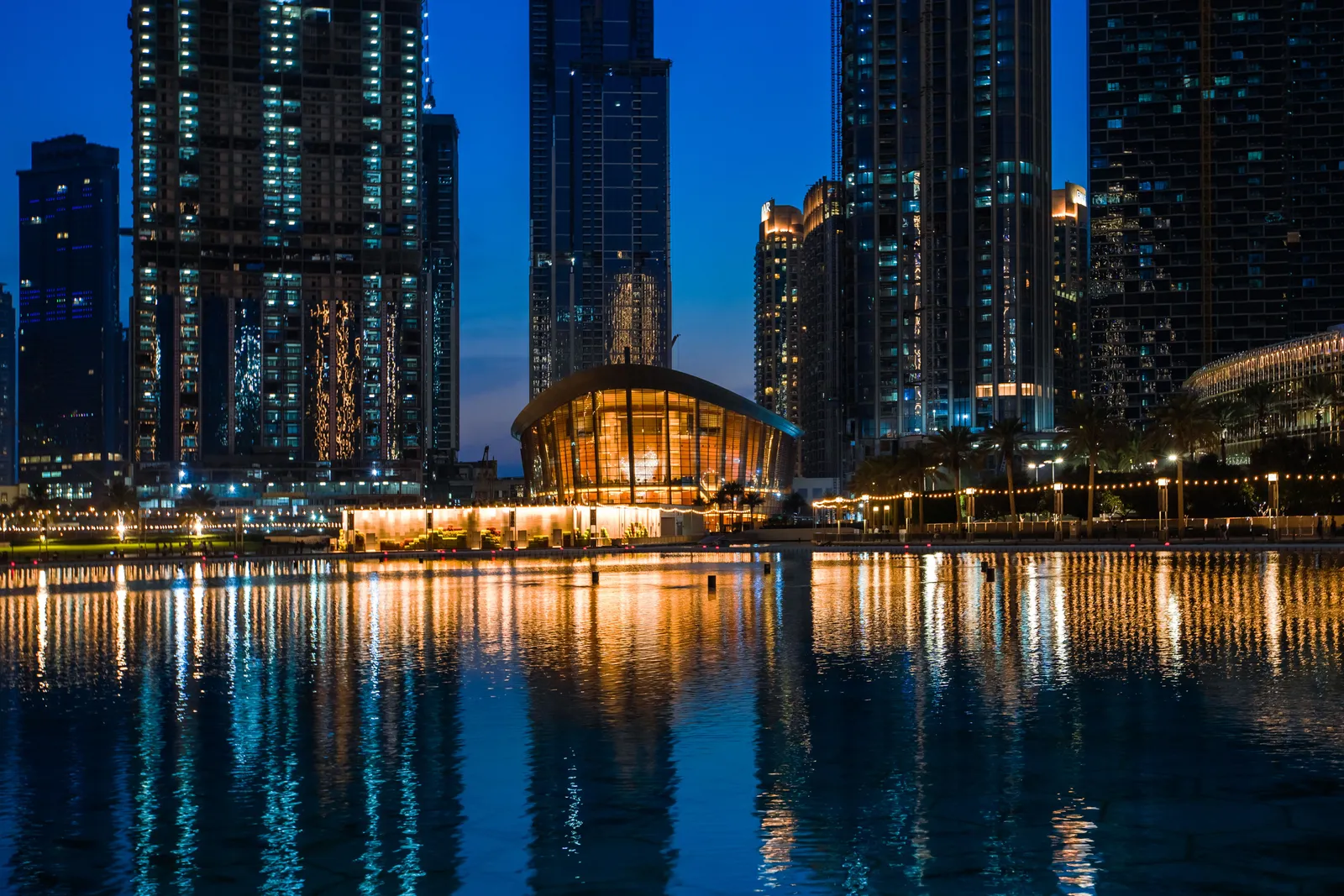
Dubai sells experiences at a scale few cities attempt. There is an observation deck on the tallest building on earth, a fountain choreographed to music, an indoor ski slope and a wheel that carries you two hundred metres above the sea. All of them are impressive and all of them are engineered, ticketed and queued.
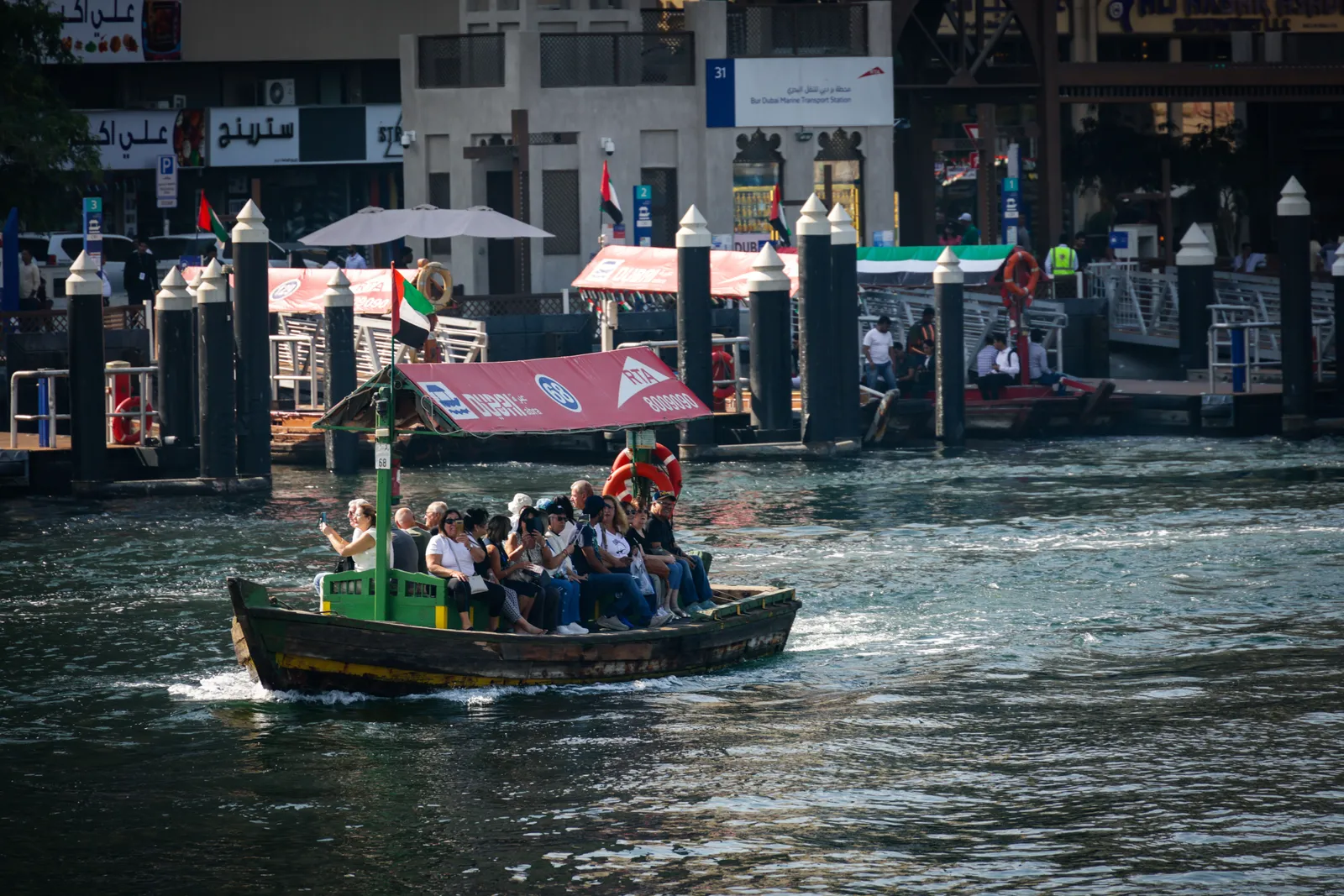
The abra is none of those things. It is a wooden boat with a diesel engine and a bench around the edge, it crosses Dubai Creek in about five minutes, and it costs a coin. It has been doing roughly the same job in roughly the same way since long before any of the towers existed, and it is still doing it as ordinary transport rather than as a heritage attraction. That is exactly what makes it worth your time.
What an abra actually is
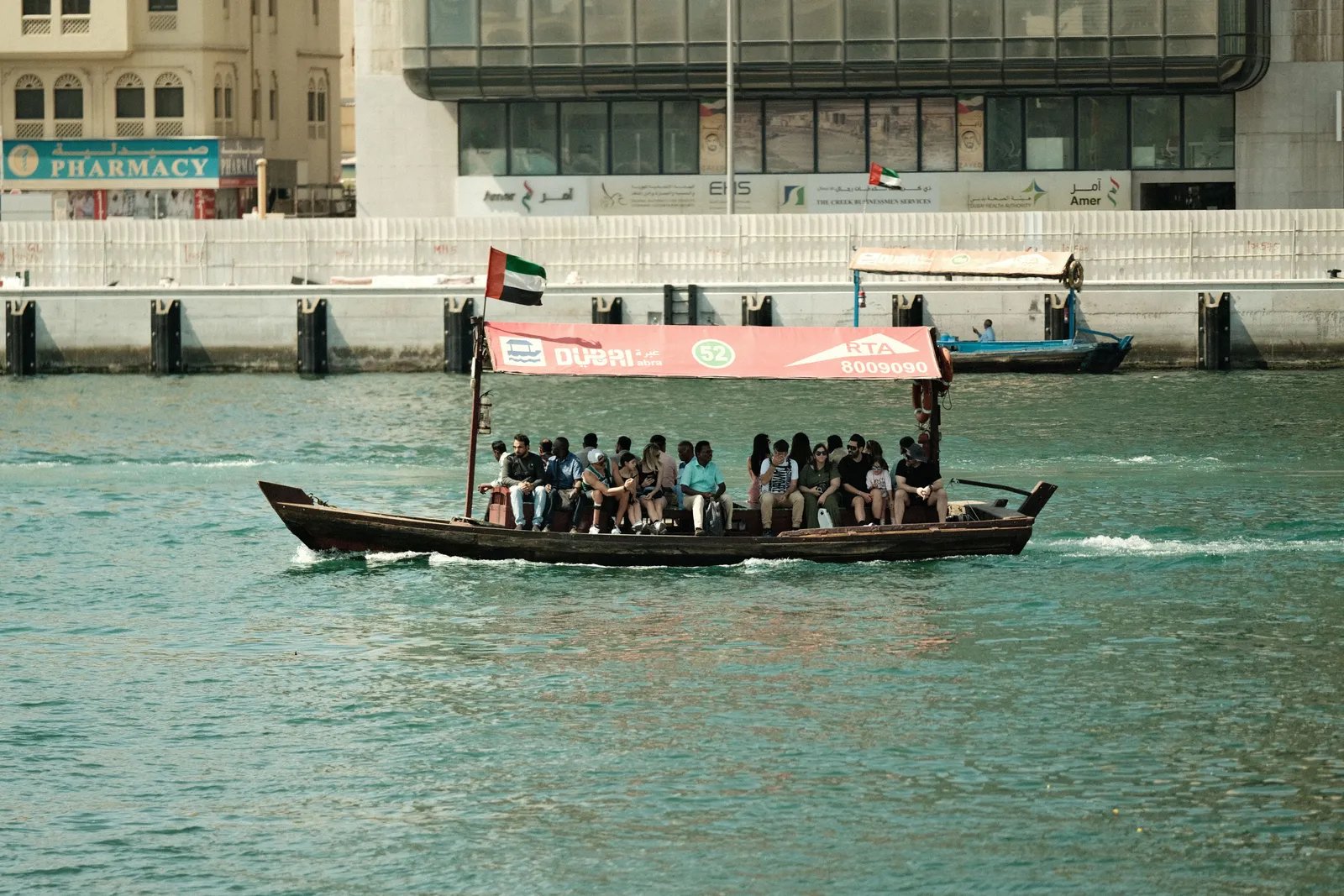
An abra is a small open wooden boat, traditionally used to ferry people across the Creek, the saltwater inlet that splits old Dubai into Deira on the north bank and Bur Dubai on the south. The driver sits amidships beside the engine. Passengers sit facing inwards on a bench that runs around the rim, packed in shoulder to shoulder, and the fare is collected in cash by hand once you are underway.
The important thing to understand is that this is public transport, not a tour. The abras are operated within the Roads and Transport Authority network, the fare is set centrally, and the boats exist because thousands of people who work in one souk district and live near the other need to get across the water twice a day. Tourists are a minority of the passengers on most crossings, and nobody on board is performing anything.
That is also why it feels different from everything else on a Dubai itinerary. You are not being shown old Dubai. You are simply in it, using the thing that everyone else is using.
The two crossings, and where the stations are
The classic route runs between the Deira side, near the Gold Souk and the Spice Souk, and the Bur Dubai side, by the textile souk and the edge of the Al Fahidi neighbourhood. There is more than one station on each bank and more than one route across, and in practice which one you take matters less than which souk you want to be standing in afterwards.
Boats do not run to a schedule. An abra leaves when its bench is full, which for most of the day means a wait of a few minutes at most. You walk on to the pontoon, step down into the boat, sit, and it goes. Nobody sells you a ticket in advance and there is no barrier to pass.
Carry small notes. The fare is paid in cash to the driver, who is steering the boat while making change, and handing over a large note in a crowded boat is a slow and slightly awkward business.
Shared crossing or private charter
Two products share the same boats, and confusing them is the most common way visitors overpay.
The shared crossing is the one described above. You pay a small fixed fare, sit with everyone else, and go directly from one bank to the other. This is the one worth doing.
The private charter is booked by the half hour, costs many multiples of the shared fare, and runs up and down the Creek rather than across it. You get the boat to yourself and a longer, slower route past the waterfront on both sides. For a group at sunset with a camera, it is genuinely lovely and reasonably priced compared with any other private boat in the city.
The trap is being steered towards a charter when you asked for a crossing. If someone approaches you on the waterfront and quotes a price per hour, you are being offered the charter. The shared crossing has no salesman: you simply walk to the station and get on the boat.
Fitting it into a morning in old Dubai
The abra solves a logistical problem as well as being an attraction in its own right, because the souks sit on opposite banks and the boat is the direct link between them.
A sequence that works well: start on the Deira side in the early morning while the Spice Souk still smells of spice rather than of heat, walk through the Gold Souk when it opens, take the abra across, and spend the rest of the morning in the textile souk and the lanes behind it before the temperature makes walking unpleasant.
Reverse it if you prefer, or cross twice. At this fare, crossing twice is not a decision that needs thinking about. Our guide to the Creek souks covers what is actually worth buying on each bank and how the haggling works, which is the part that takes the time.
Getting to the Creek
The metro reaches both banks. Al Ras and Baniyas Square serve the Deira side and Al Fahidi and Al Ghubaiba serve the Bur Dubai side, and from each of those stations the waterfront is a short walk that gets shorter if you look at the map before you set off rather than after.
The walk from the station is genuinely the hard part of the trip in summer, when a ten-minute walk in full sun is not a trivial thing. In the cooler months it is pleasant. Our guide to the Dubai Metro and getting around explains how the Nol card works and which line serves which side, and it is worth reading before your first day rather than at a ticket machine.
A taxi will also drop you at either station, and from the modern side of the city that is often the simpler option. The Creek is not far from Downtown in distance. It is a very long way from it in every other sense.
Where it sits among everything else
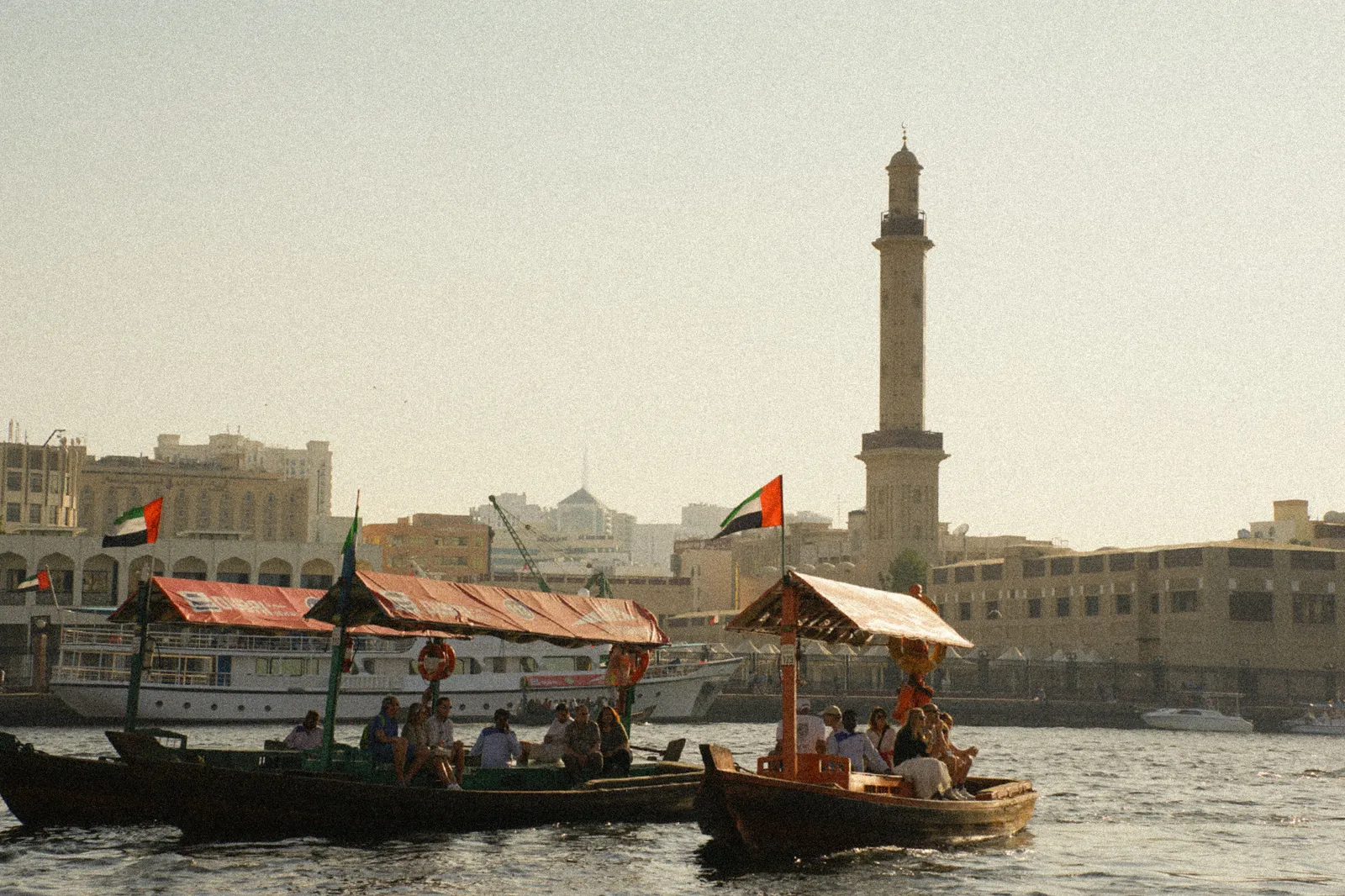
It is worth being honest about scale. The abra will not be the most spectacular thing you do in Dubai. It cannot compete with the view from the top of the Burj Khalifa or with a desert sunset, and if you rank your days by spectacle it will come last.
Rank them by what you remember a year later and it moves a long way up. Our guide to Dubai’s main attractions sets out the headline sights and what each is worth, and the abra earns its place on that list for a reason that has nothing to do with engineering.
In one line: it is five minutes, it costs a coin, and it is the only part of the city that has not been redesigned for you.