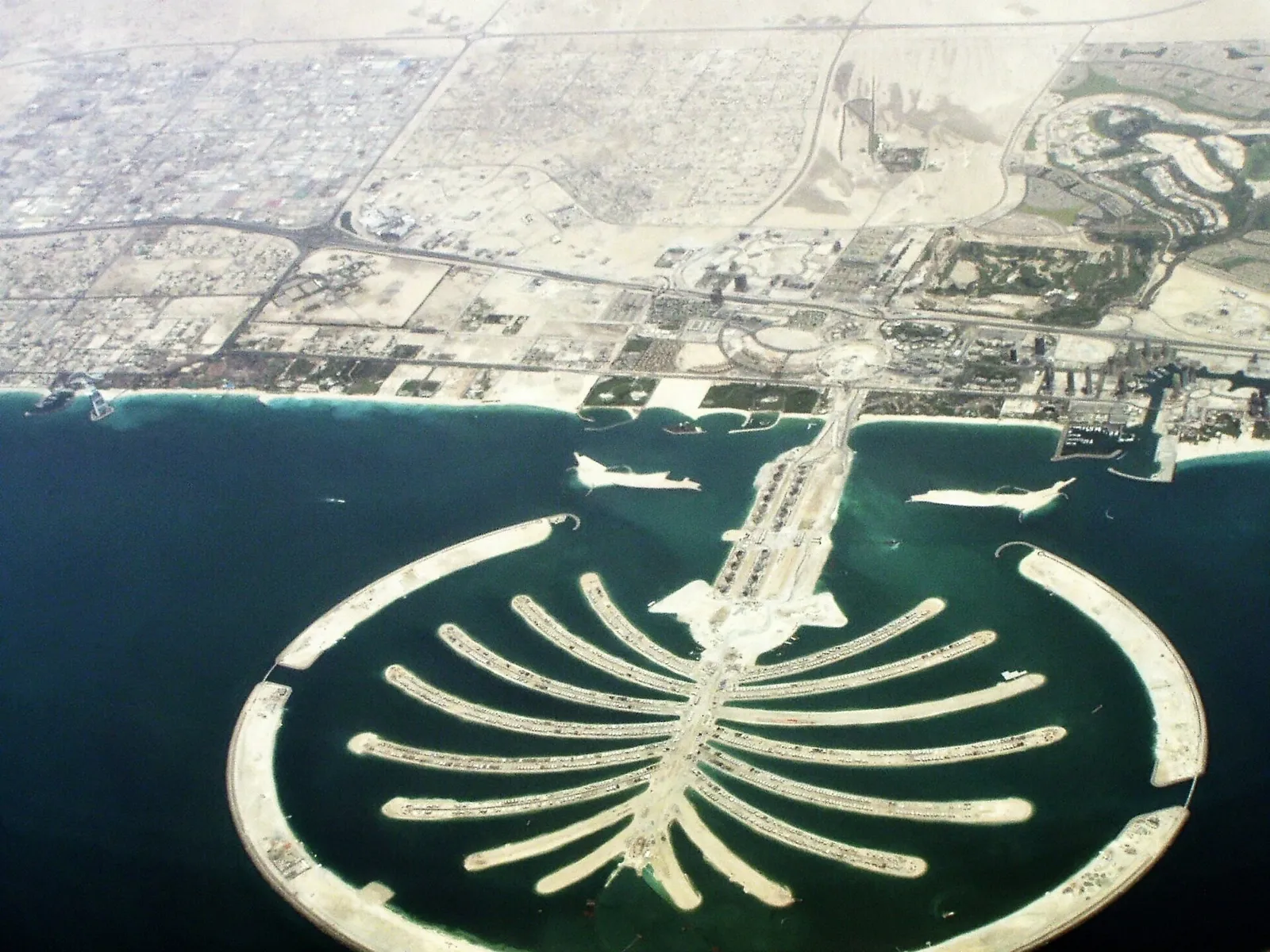
The Palm is the thing people point at from the aeroplane window: an artificial peninsula in the shape of a palm tree, with a trunk, sixteen fronds and a curved breakwater around the outside. It was built out of dredged sand and rock in the early 2000s and it now holds thousands of homes, a row of resorts and one of the busiest hotel strips in the world. Visiting it is easy. Understanding what it is for takes about half a day.
How the island is laid out
The trunk, a single wide road running out from the mainland, lined with apartment towers, with the monorail down the middle.
The fronds, sixteen residential spurs off the trunk, entirely private housing with no through route and no public beach.
The crescent, the outer breakwater, which holds the large resorts, the water park and the aquarium.
The boardwalk, a public walking and running route along the outer edge of the crescent, with the skyline behind you.
The observation tower at the top of the trunk, with a deck looking back down the whole shape.
Very large distances, which look small from the air and are not on foot.
What to do
The observation deck, which is the only way to actually see the palm shape from the island, and the reason most day visitors come.
The boardwalk, several kilometres of it, best at sunrise or sunset with the skyline across the water.
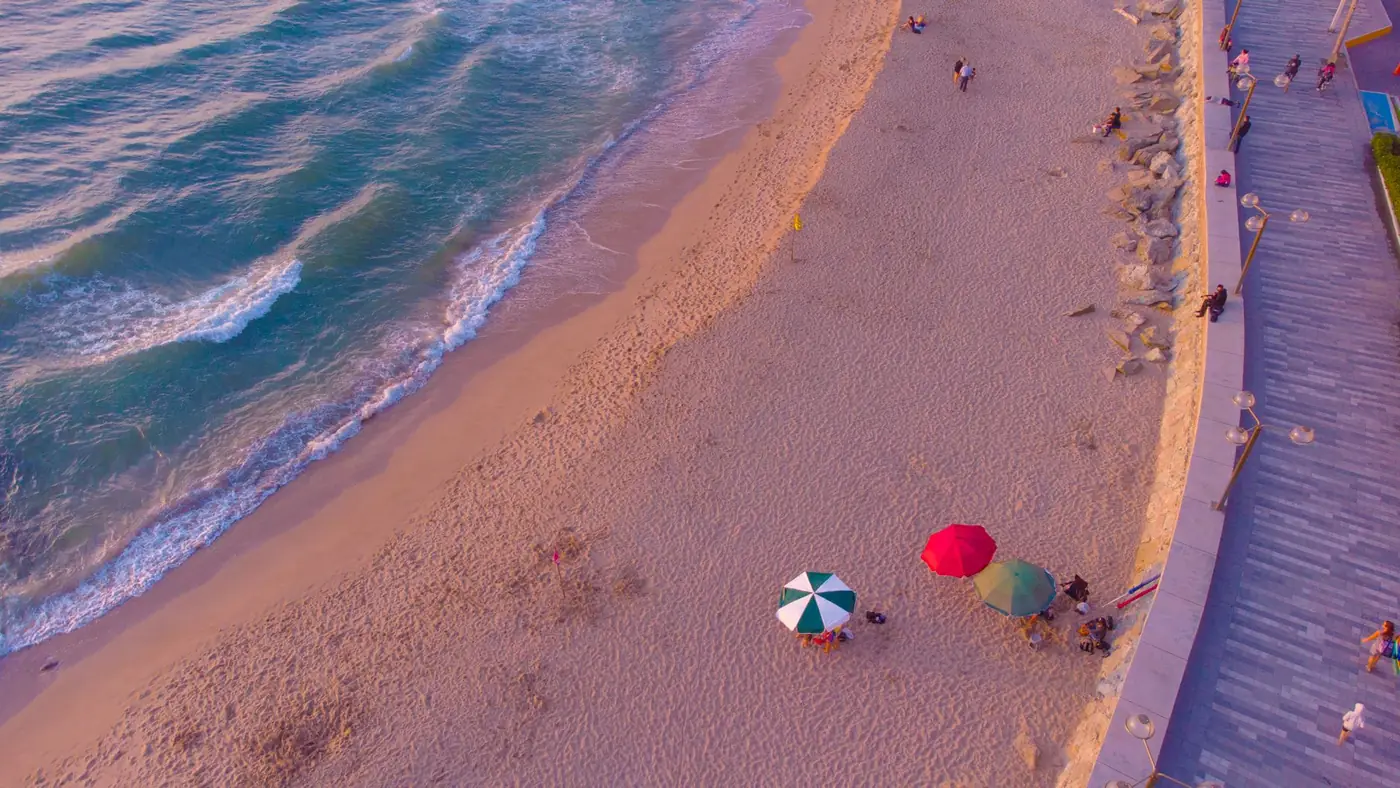
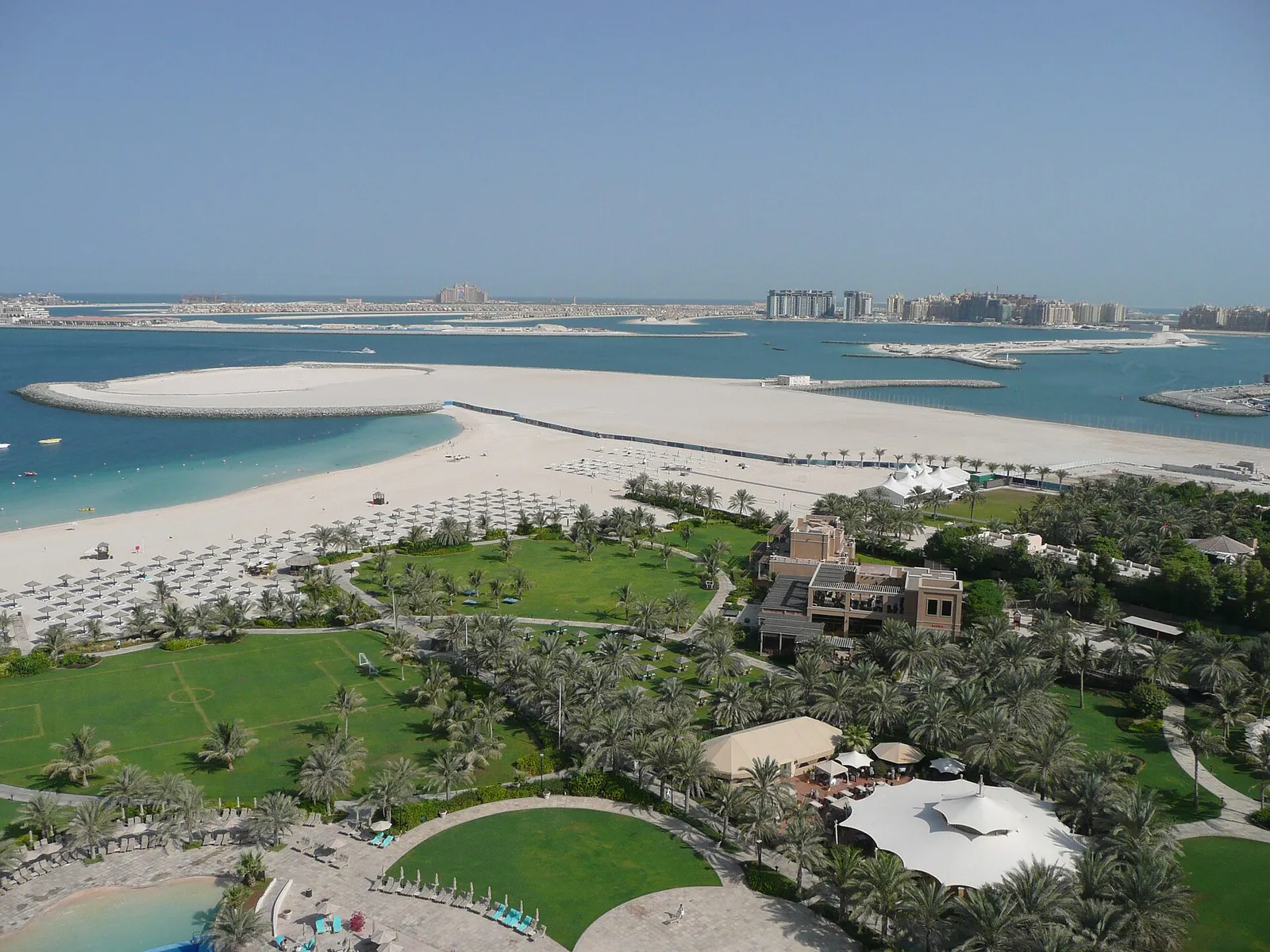
The public beach on the crescent, free, with the city in view.
The water park at the far end, one of the largest in the region, and the aquarium beside it.
Beach clubs, on day passes, which is how non guests use the resort stretches.
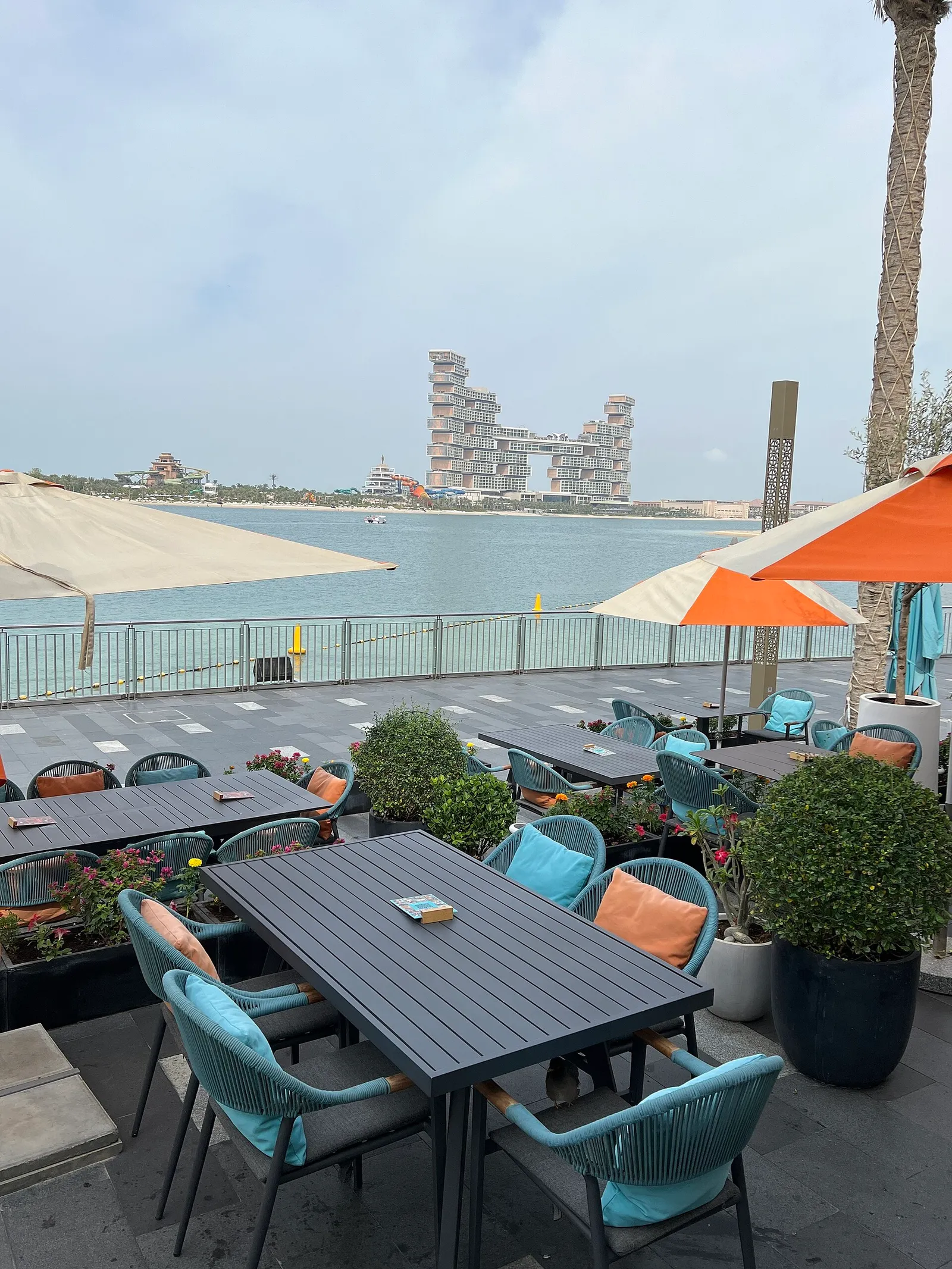
Eating, since the island holds an unusually dense concentration of restaurants for its size.
Staying on the island
The resorts on the crescent are the reason most people stay: large, beachfront, self contained and expensive.
Apartment rentals on the trunk are considerably cheaper and put you beside a road rather than a beach.
The fronds are private housing, and a villa rental there is a very quiet holiday indeed.
Getting anywhere else is a long trunk road, traffic at the base, and then the city.
Nothing is walkable in the ordinary sense outside the boardwalk and a few clusters.
Good for a resort week, poor for a sightseeing trip, and the choice is that simple.
Practical notes
The monorail has limited operating hours and does not run all evening, so check before relying on it late.
Traffic at the base of the trunk is genuinely bad at peak times.
Beach club day passes vary enormously in price and usually include a food and drink credit, which changes the real cost.
The boardwalk has very little shade and is a summer sunrise or sunset activity only.
Building work continues on and around the island, so a view can change.
Taxis are easy to get on the crescent and harder deep in the fronds.
Where this fits in a Dubai trip
The Palm is a half day as a visitor and a whole holiday as a base, and those are two different decisions.
For where else in the city you might sleep and what each district is like, our guide to Dubai’s neighbourhoods covers the map.
For the district immediately across the water, which has the walkability the Palm lacks, our guide to Dubai Marina and JBR covers the alternative.
And for the free beaches back on the mainland shore, our guide to Kite Beach and the Jumeirah coast covers where the city actually swims.
The short version
Visit the Palm for the observation deck, the boardwalk and the public beach on the crescent, which together make a good half day. Ride the monorail one way for the experience and take a taxi back. Use a beach club day pass if you want a resort stretch without staying on one. And stay on the island only if you are having a resort holiday, because for a city trip the trunk road quietly costs you an hour every single day.