There is an entire emirate twenty minutes from central Dubai that most visitors never set foot in, and it holds the best museum of Islamic art in the region, a fully restored historic quarter and a souk that is genuinely architectural. It also has one rule that regularly catches people out. Here is the case for a day in Sharjah.
Twenty minutes and a different atmosphere
Sharjah borders Dubai directly. Outside peak hours the drive is short enough to feel like crossing a district rather than an emirate.
The complication is traffic. A very large number of people live in Sharjah and work in Dubai, and the roads between the two are among the most congested in the country at weekday rush hours. Travelling mid-morning and returning early afternoon sidesteps the problem completely.
What you arrive into feels different. Sharjah has positioned itself deliberately as the cultural emirate rather than the commercial one, and the result is a place with a considerably more traditional texture than its neighbour, without being difficult for visitors.
The rule that catches people out
Sharjah is dry. Alcohol is prohibited entirely: not served in hotels or restaurants, not available to buy, and carrying it into the emirate is an offence.
This is a legal difference rather than a matter of custom, and it applies to anyone driving through with a bottle in the boot as much as to anyone hoping for a glass of wine with dinner. It is the single most common way visitors get into trouble here, usually through simply not knowing.
The dress code is also applied more consistently than in Dubai, where the visitor-facing areas are relaxed. Covering shoulders and knees is the practical standard for everyone. Anyone comfortable with the norms of old Dubai will find Sharjah straightforward.
What to see
The Sharjah Museum of Islamic Civilisation is the anchor and the reason to make the trip. Housed in a converted souk building on the creek, it covers science and astronomy, manuscripts, ceramics, metalwork and coinage across the Islamic world, and it is a serious institution rather than a display of objects. Two hours is not too long.
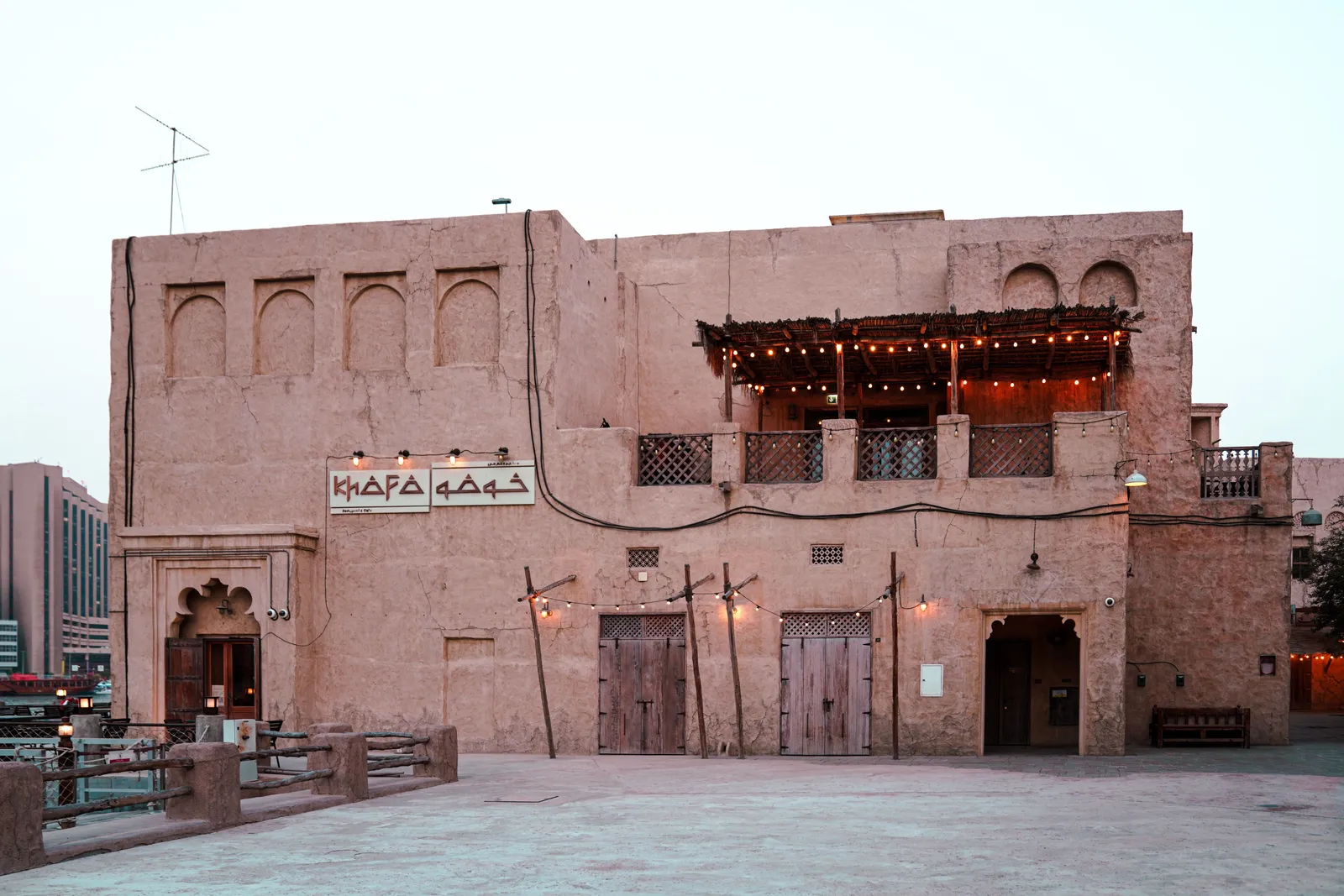
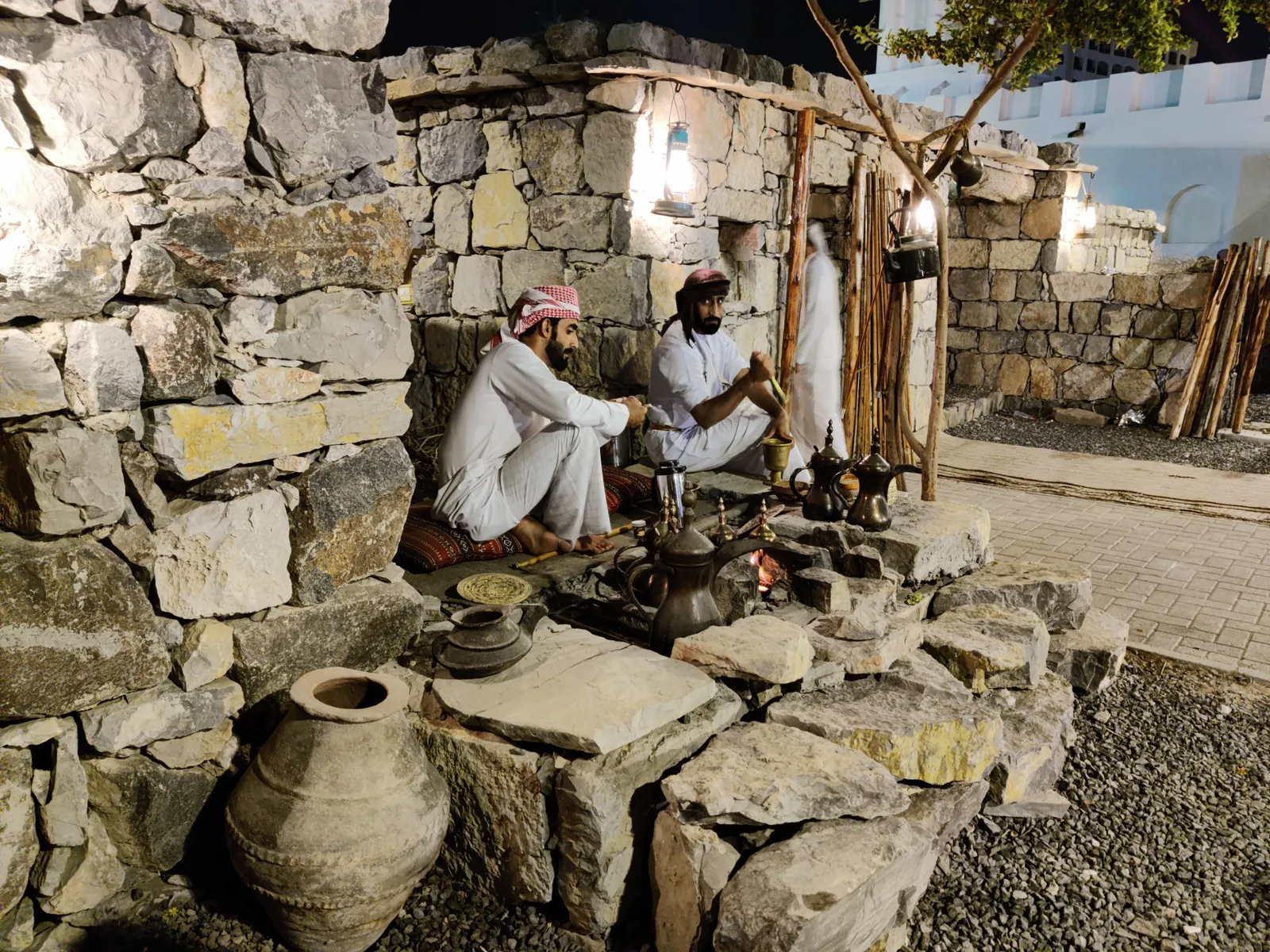
The Heart of Sharjah is a large restoration project rebuilding the historic quarter around the creek in coral stone and gypsum, with museums, courtyards and craft workshops occupying the restored buildings. It is the most complete surviving old town in the region and considerably less busy than the equivalent district in Dubai.
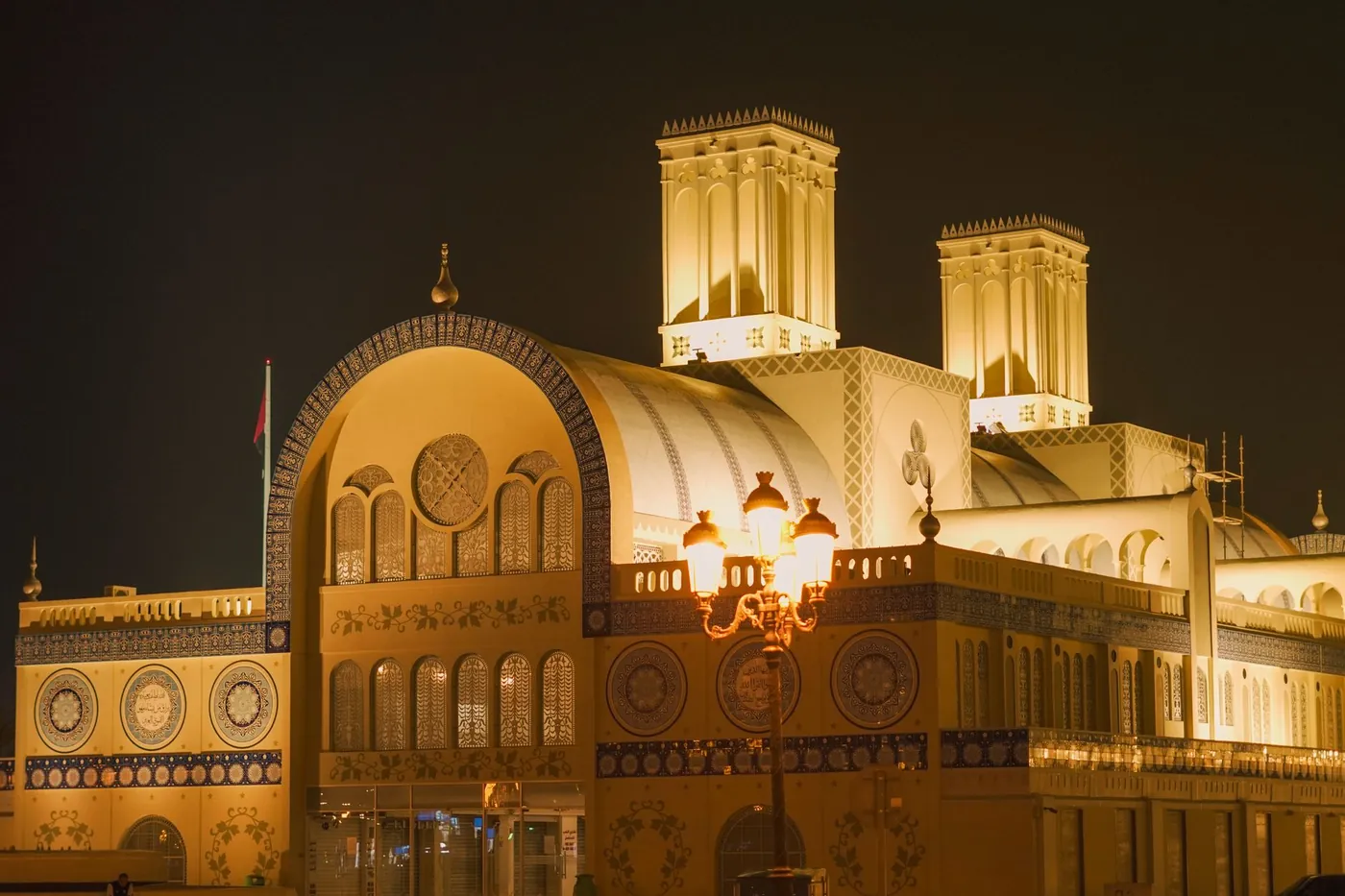
The Blue Souk, formally the Central Souk, is worth entering for the building alone: long barrel-vaulted halls faced in blue tilework, filled with carpets, gold, textiles and antiques. It is one of the more distinctive market buildings anywhere in the Gulf.
Al Qasba is the waterfront strip, with a canal, a large observation wheel and restaurants, and it is the easy place to eat.
Two emirates, one driverA guided day handles the border-crossing traffic and the sequencing, and removes the alcohol question from the car entirelyHow it compares
The obvious comparison is with the historic district in Dubai, covered in our guide to old Dubai and the souks. The honest verdict is that Sharjah’s version is larger, more thoroughly restored and much quieter, while Dubai’s is more convenient and more integrated into a day of other things.
Against Abu Dhabi, the other standard day trip, Sharjah is far closer, far cheaper and much less grand. Abu Dhabi has the Grand Mosque and the Louvre, which are world-class in a way nothing in Sharjah is. Sharjah has depth, texture and no crowds. Our comparison of Dubai and Abu Dhabi covers that emirate in more detail.
Where it fits
On a first short trip to Dubai, Sharjah probably does not make the list, and our guide to the top attractions sets out what does.
It earns its place on a longer stay, a repeat visit, or for anyone with a specific interest in Islamic art, architecture and history rather than in modern spectacle. It is also noticeably cheaper than Dubai across the board, which matters for anyone watching the budget.
The sites cluster around the creek and the Al Qasba waterfront closely enough to be walkable, which makes a half day genuinely sufficient. For anyone with a car and a full day, Sharjah sits on the road towards the northern emirates and combines naturally with a longer drive up the coast.
Practical notes
Getting there. A taxi from central Dubai is straightforward and not expensive, though drivers may be reluctant at peak hours because of the return traffic. Intercity buses run frequently and cheaply. The Dubai metro does not extend into Sharjah, which surprises people who assume the network covers the whole conurbation.
Timing. Mid-morning out and early afternoon back is the window that avoids the commuter crush in both directions. Friday mornings are quiet, and museums in the emirate have historically kept different hours on Fridays, so check before building a Friday around them.
Eating. The absence of alcohol shapes the dining scene rather than diminishing it, and Sharjah has excellent and inexpensive Arab, Iranian and South Asian food, particularly around the older districts. The waterfront at Al Qasba is the easy option with the most choice.
Money. The same currency and the same cards work throughout, and prices across the board sit noticeably below Dubai for the equivalent thing, which is worth knowing if you are shopping for carpets, textiles or gold rather than simply looking.