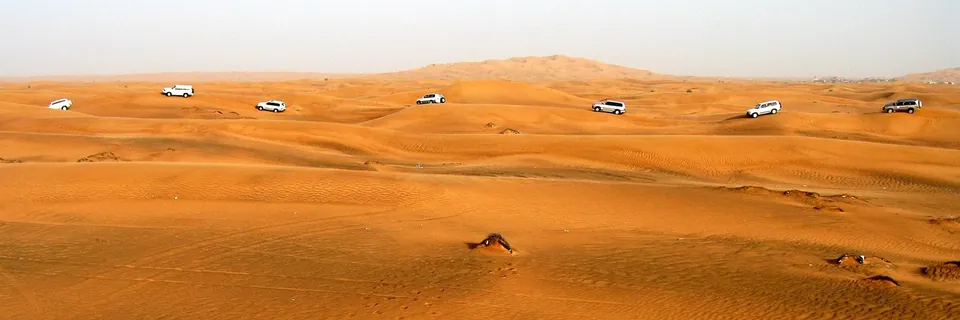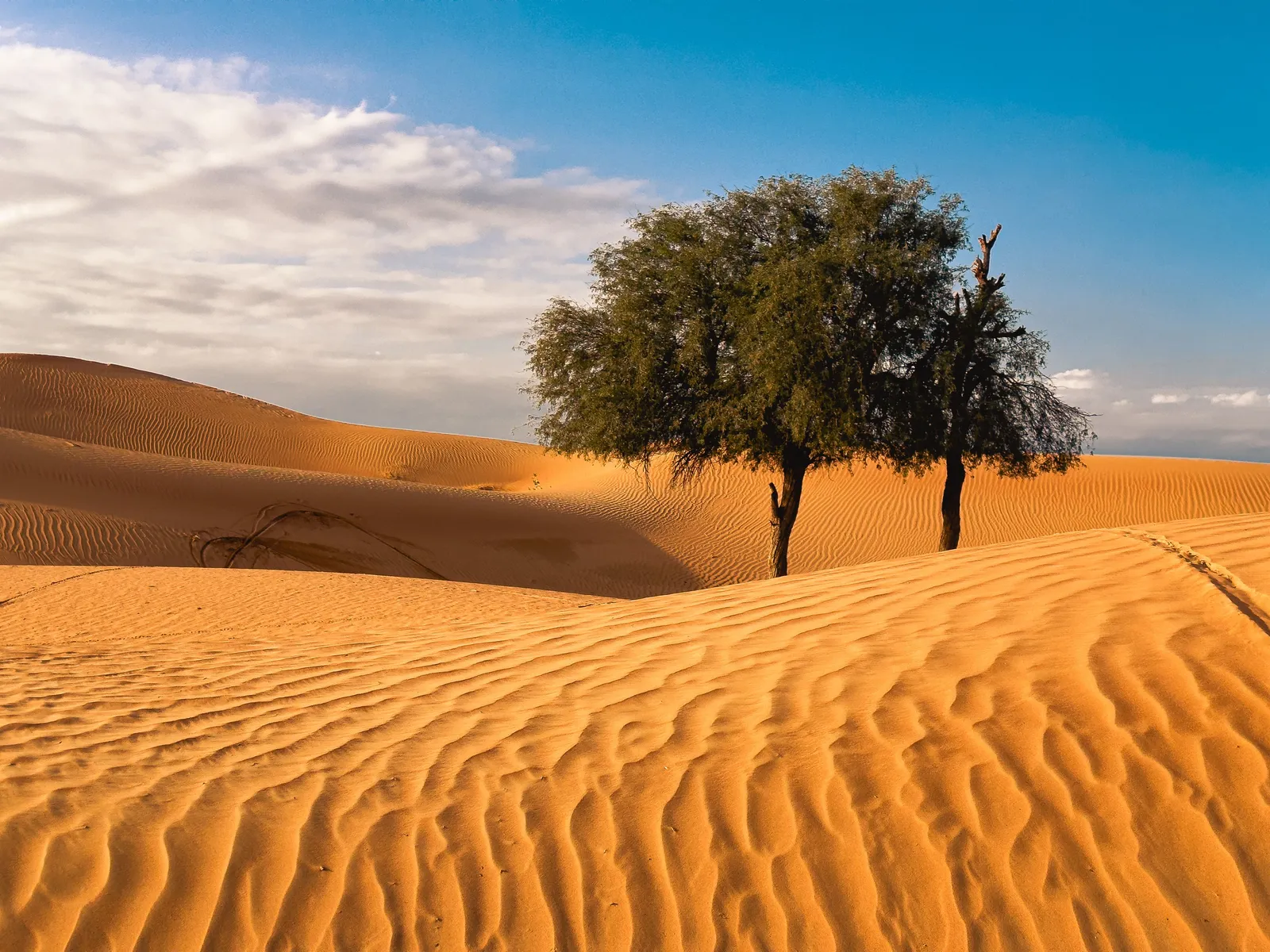
Almost everything written about Dubai’s desert assumes you will book a safari: a pickup, a convoy of 4x4s, an hour of dune bashing and a camp with dinner and a falcon. That is a good product and plenty of people love it. It is not the only way to get into the desert here, and it is not even the largest desert experience in the emirate.
Al Marmoom Desert Conservation Reserve sits on Dubai’s inland edge, roughly forty minutes from Downtown depending on traffic, and it is unfenced, free to enter and crossed by ordinary tarmac roads. You can drive in yourself, park, and spend a morning among ghaf trees, lakes and oryx without anyone selling you anything. It also carries rules that a lot of coverage skips, and those rules are the difference between a good day and a serious problem.
What Al Marmoom actually is
The reserve was established in 2018 as the region’s first unfenced urban desert conservation reserve, a project designed to protect a large stretch of Dubai’s remaining natural desert rather than fence off a small park within it. Published figures for its size vary considerably between sources, and it is commonly described as covering close to a tenth of Dubai’s total land area, so treat any single number you see quoted online with some caution.
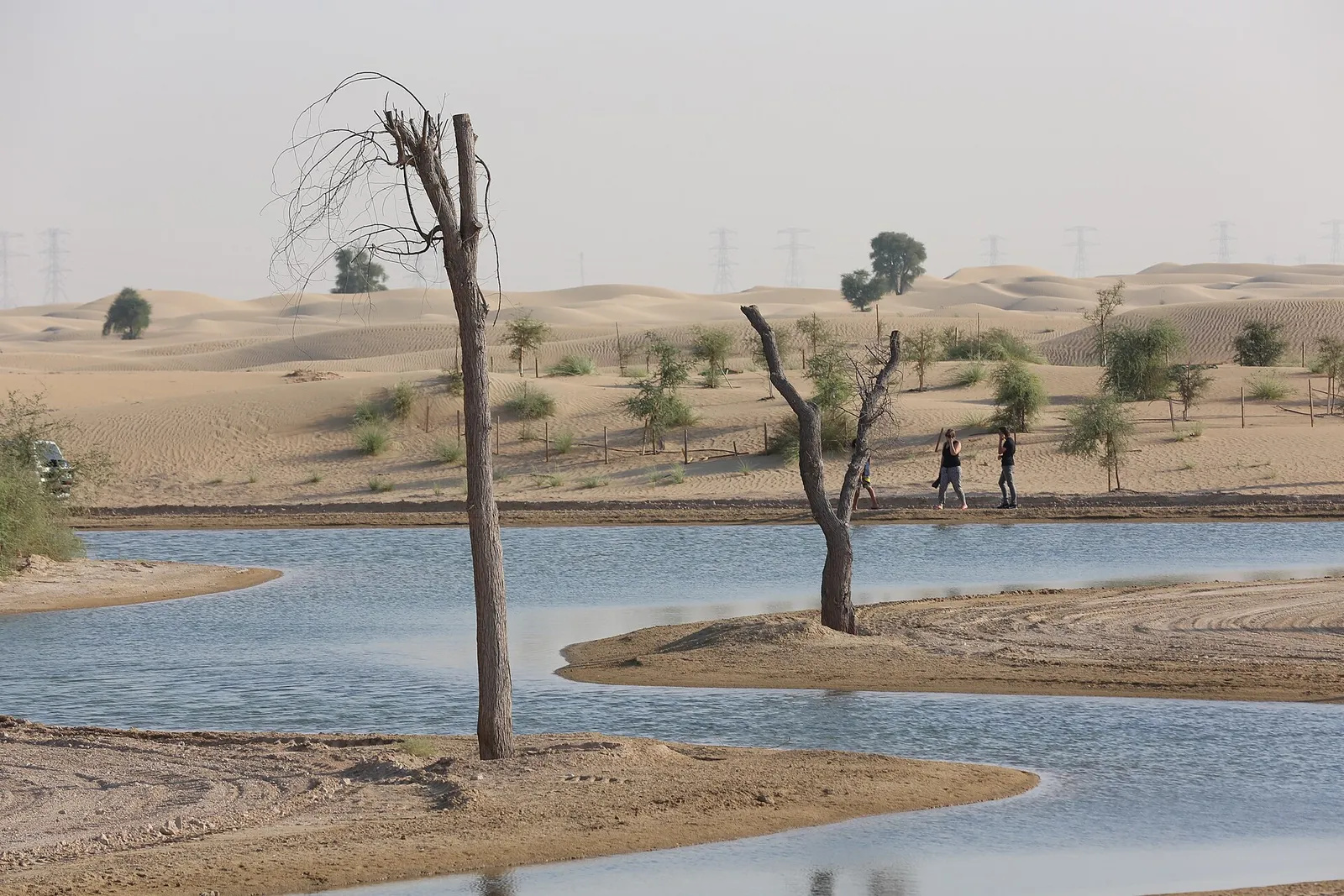
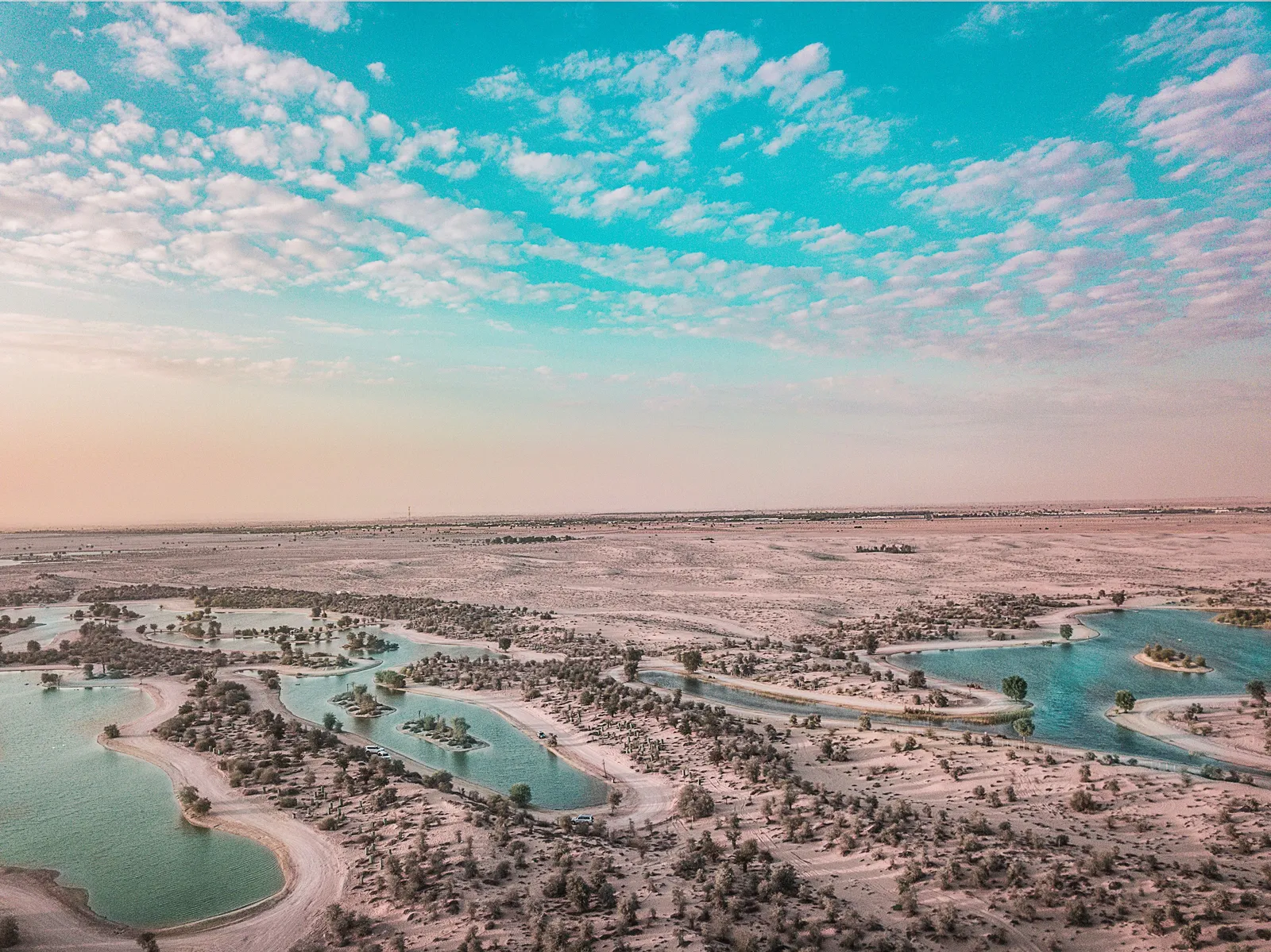
What is consistent is the ecology. The reserve supports a substantial population of Arabian oryx and gazelle, desert foxes and other small mammals, and well over two hundred bird species between resident and migratory populations, concentrated heavily around the man-made lakes at its centre. Those lakes, and the ghaf woodland around them, are why a place at the edge of a desert city holds this much wildlife at all.
Unfenced is the key word. There is no gate, no ticket office and no closing time. That openness is exactly why the management rules matter.
The rules that actually bind
Two things catch visitors out, and both are worth reading twice.
Off-track dune driving is restricted. Inside the reserve, driving off the tarmac and onto the dunes is permitted only to operators holding the official eco-tour certification awarded through the Mohammed bin Rashid Al Maktoum Centre programme. A small number of operators hold it. This is not a formality: the point of an unfenced conservation reserve is that vehicle tracks damage the habitat that the reserve exists to protect, and taking a hired 4x4 off the road here is not the same thing as doing it on open desert elsewhere in the emirate.
Independent camping is not a given. The reserve carries restrictions on camping, open fires and barbecues, and overnight stays inside it are generally arranged through certified eco-camp operators rather than pitched independently. Dubai Municipality separately runs a seasonal permit scheme for temporary camps in designated areas, which is the legitimate route for a self-organised camping trip. If an overnight is the point of your trip, confirm the current rules and the designated areas with Dubai Municipality at dm.gov.ae rather than relying on a blog, including this one.
Beyond those two, the code of conduct is what you would expect and is worth honouring: stay on marked routes, take all waste out with you, do not feed or chase wildlife, and skip the flash photography near animals.
What you can do without booking anything
The Al Qudra lakes. A chain of man-made lakes in the middle of the reserve, with parking, shaded seating and the highest concentration of birdlife anywhere in the area. This is the single easiest stop and where most first visits start. Our guide to Al Qudra lakes covers the area itself in more depth.
Love Lake. A pair of interlocking heart-shaped lakes cut into the desert, with walking paths, planted trees and viewing points. Popular, photogenic and busiest at weekends.
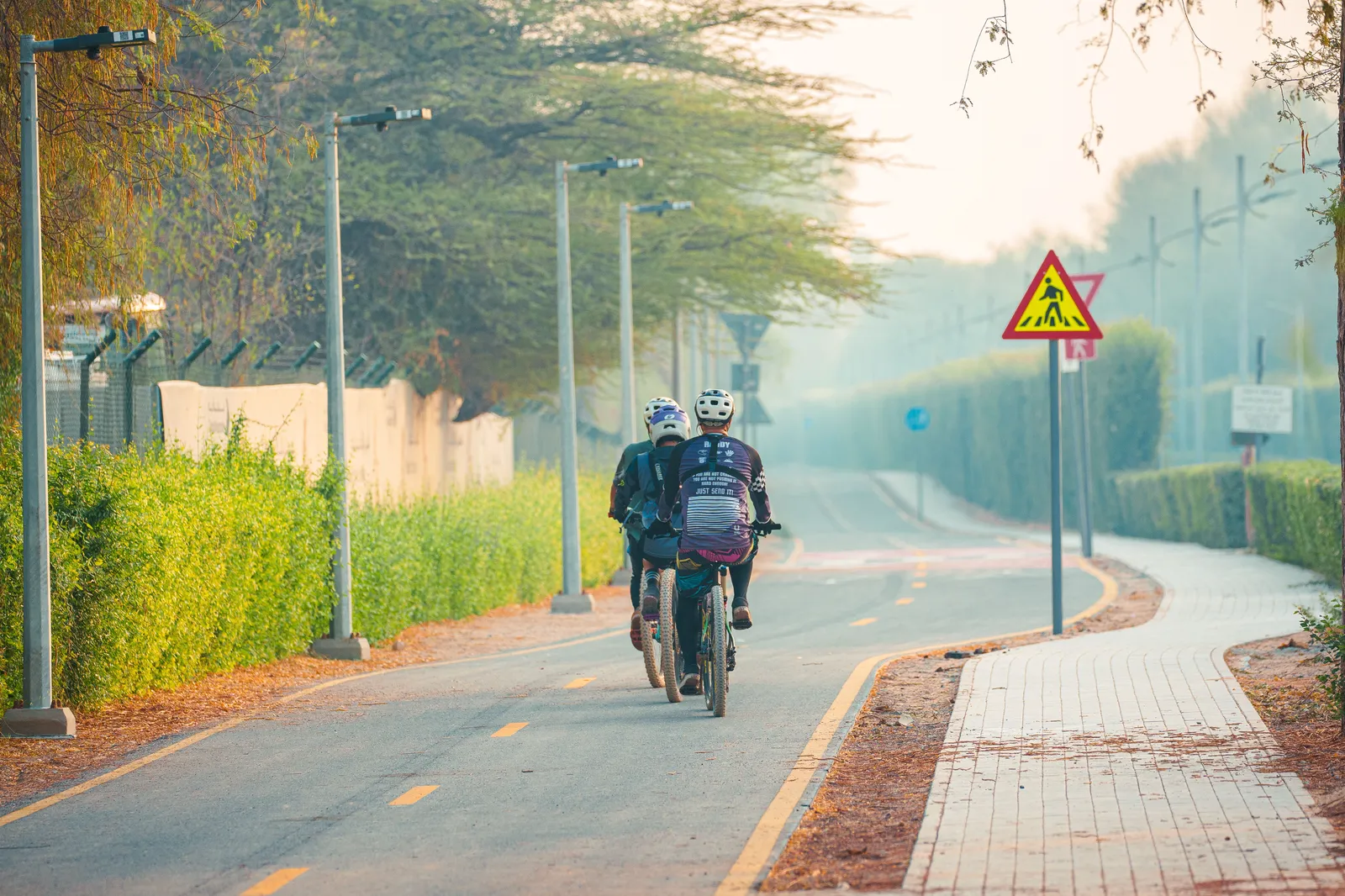
The Al Qudra cycle track. A long dedicated cycling route running out from Seih Al Salam into the desert, with a shorter loop for casual riders and a much longer circuit for serious ones. It is free, and it is the reason you will see road cyclists in the middle of a conservation reserve at dawn. Bike hire operates near the start point.
Sitting still. Underrated, and the thing the reserve rewards most. Park somewhere away from the main lots, walk a short distance, and wait.
Camel racing and the heritage village
The Al Marmoom camel racetrack is part of the same wider area and it is a genuine working racing venue rather than a tourist show. Race mornings run through the cooler months, broadly from around October to April, with the season building towards the Al Marmoom Heritage Festival in spring, when the crowds and the prize money are at their largest.
The heritage village alongside it is not a permanent daily attraction. It comes to life around the festival period in spring, when it fills with craft stalls, food and Emirati cultural programming. Outside those windows it is usually quiet or closed, so check what is scheduled before making a special trip.
You need your own wheels for this oneThere is no public transport into the reserve, so compare car hire before you goGetting there and staying safe
There is no metro, no bus and no realistic taxi-and-wait option for a reserve this size, so this is a car trip. Any ordinary rental car handles the tarmac roads fine. Fill the tank before you leave the city, because fuel and shops thin out fast once you turn inland, and phone signal is patchy in places.
Take considerably more water than you think you need, tell someone where you are going, and do not walk far from your car in the warmer months. Between late spring and early autumn, the middle of the day out here is dangerous rather than merely unpleasant, and an early morning visit is the only sensible option. In winter the reserve is comfortable for most of the day and can be surprisingly cold at dawn.
Should you do this instead of a safari?
Not instead. Alongside, or as the alternative if the packaged version is not what you want.
A booked safari gives you dune driving, a camp, dinner and entertainment, delivered to a schedule with someone else doing the driving. If that is what you are after, our desert safari guide explains how the operators and packages differ and what a fair price looks like, and the morning versus evening safari comparison is worth reading before you pick a slot.
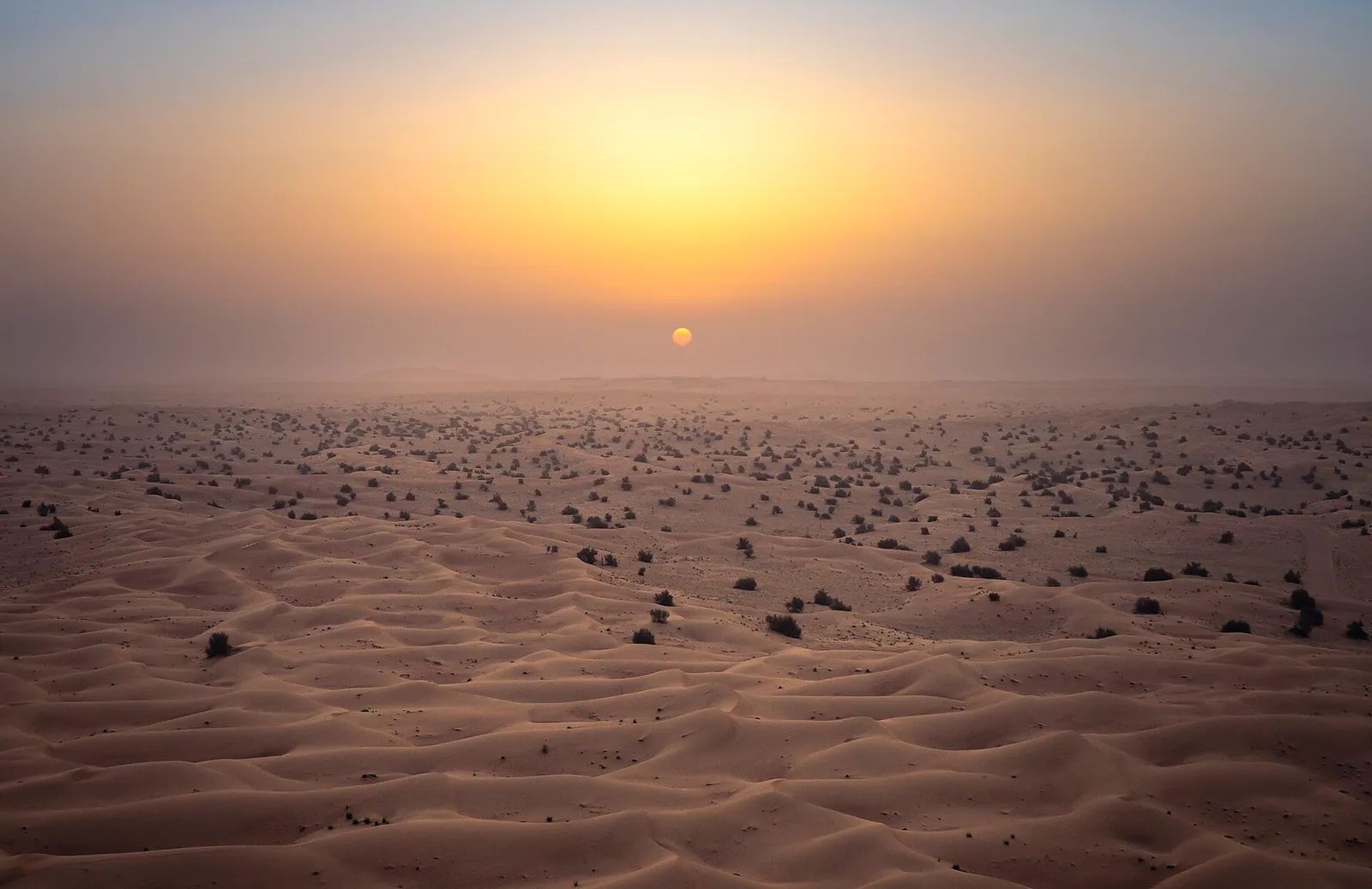
Al Marmoom gives you the opposite: silence, no schedule, no upsell, and the chance to see an oryx that nobody arranged for you. It costs nothing but a tank of fuel and an early alarm. Plenty of people who found the safari a bit staged come away from a dawn at Al Qudra thinking that this was the desert they had come to see.