There is a version of this article that spends its length complaining that Souk Madinat Jumeirah is not a real souk. That version would be accurate and useless, because nobody who built it claimed otherwise and nobody who enjoys it cares.
What it is: a covered, air-conditioned market built inside a resort complex, laid out as winding lanes under carved wooden ceilings, threaded with waterways that small wooden boats run along, and pointed directly at the Burj Al Arab. What it is for: an evening. Understood on those terms it is one of the more pleasant places in Dubai to spend three hours.
What you are actually walking into
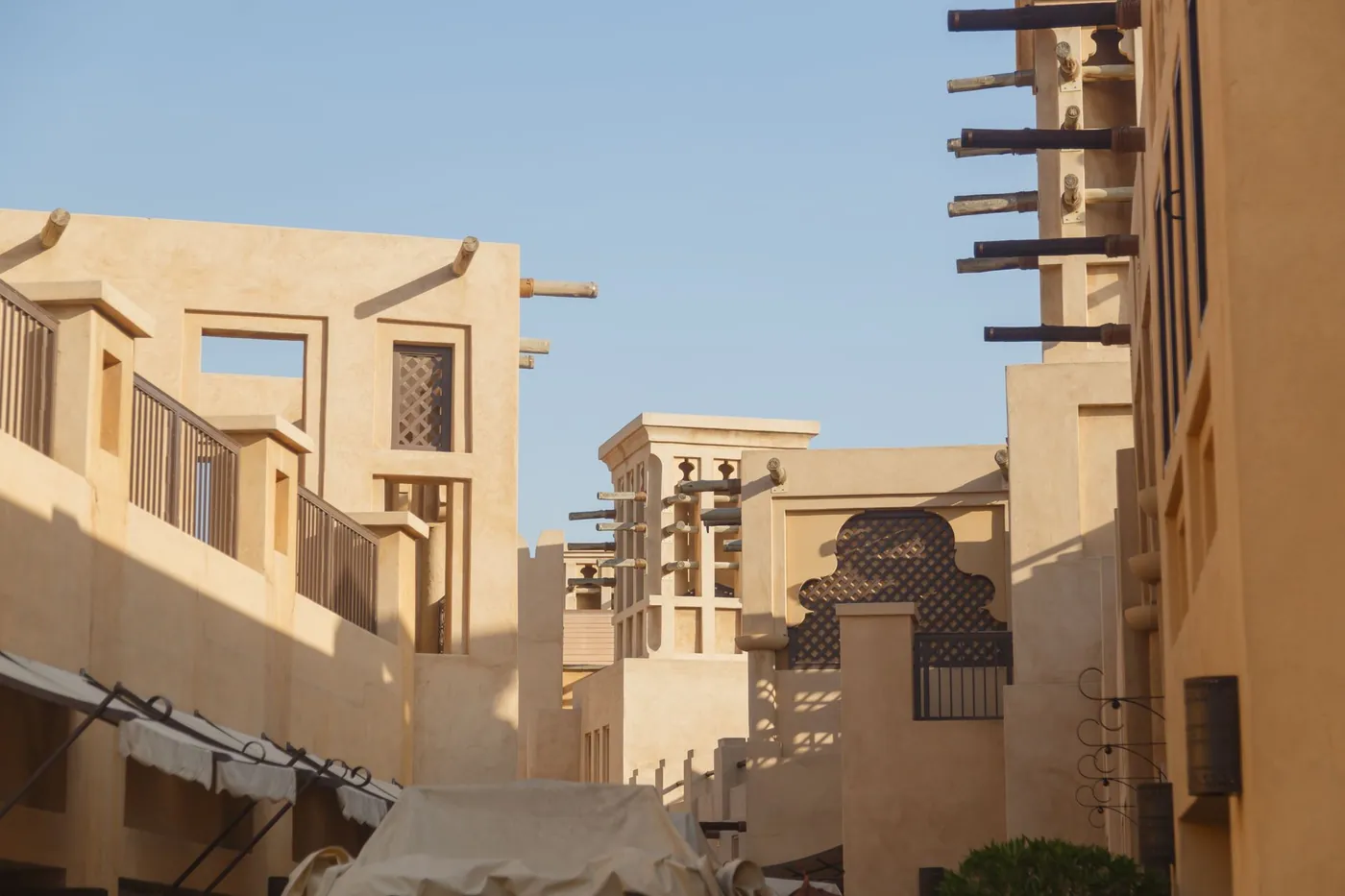
Madinat Jumeirah is a large resort complex on the coast at Umm Suqeim, built in a traditional Arabian architectural style with wind towers, canals and low sand-coloured buildings. The souk is its retail and dining heart, and it is open to the public rather than reserved for hotel guests.
Inside, the lanes are narrow and shaded, the ceilings are timber, the lanterns are hanging, and the whole thing is very well done. It is also fixed-price retail: boutiques, galleries, souvenir shops, a good deal of art, and a lot of restaurants. Nobody is calling you in from a doorway and nobody is negotiating.
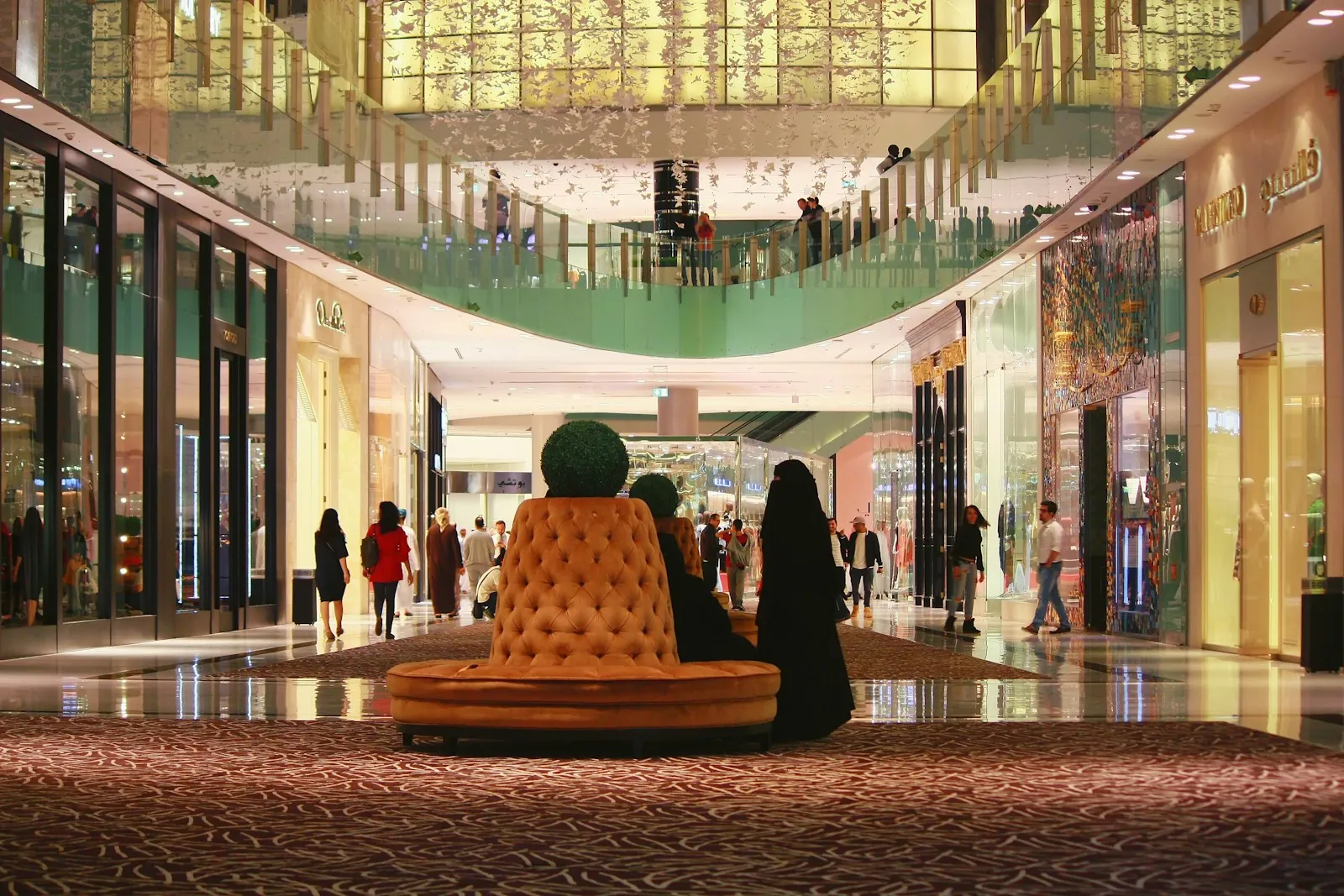
The comparison people reach for is a mall, and that is closer to the truth than “souk”, but it undersells the atmosphere. It is a nicer place to walk than a mall, by a distance.
The view, which is the real attraction
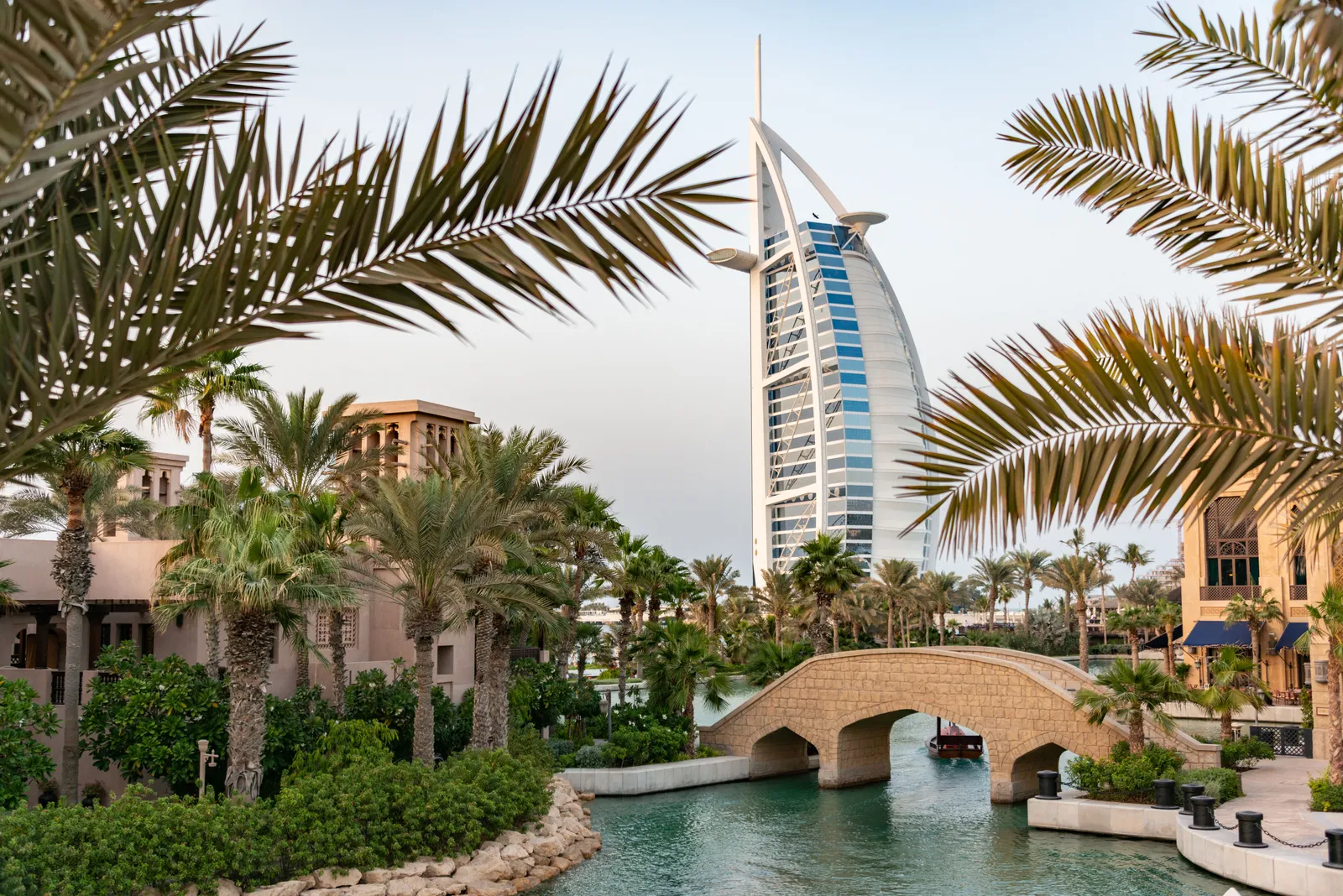
On the seaward side of the complex, terraces and bridges look across the water at the Burj Al Arab, framed by the wind towers and palms of the Madinat itself.
This is, for practical purposes, the best free view of the building in the city. It is close enough to be impressive, far enough to fit in a photograph, and the foreground does a lot of work. Late afternoon into sunset is the hour, when the sail turns gold and then lights up.
You can spend a lot of money getting closer to the Burj Al Arab. You cannot easily get a better photograph of it, and the terrace here costs nothing beyond whatever you order.
What is worth buying, and what is not
Set expectations by category.
Worth a look: the galleries and craft shops, which carry genuinely good regional art, ceramics and textiles at prices that reflect that. Also the perfume and oud shops, where the product is real even if the setting is polished.
Fine but not special: the generic souvenir shops. Camels, magnets, spice tins. Everything here is available for less at the Creek.
A trap: anything you are buying because it feels like a souk purchase. Gold, spices and fabric all exist here in tidy, expensive versions of themselves. The versions with actual price competition are twenty minutes away on the other side of town, and our guide to the Creek souks covers how the pricing works there and what a fair making charge on gold looks like.
The clean way to think about it: buy art here, buy gold there.
Eating, which is most of the point
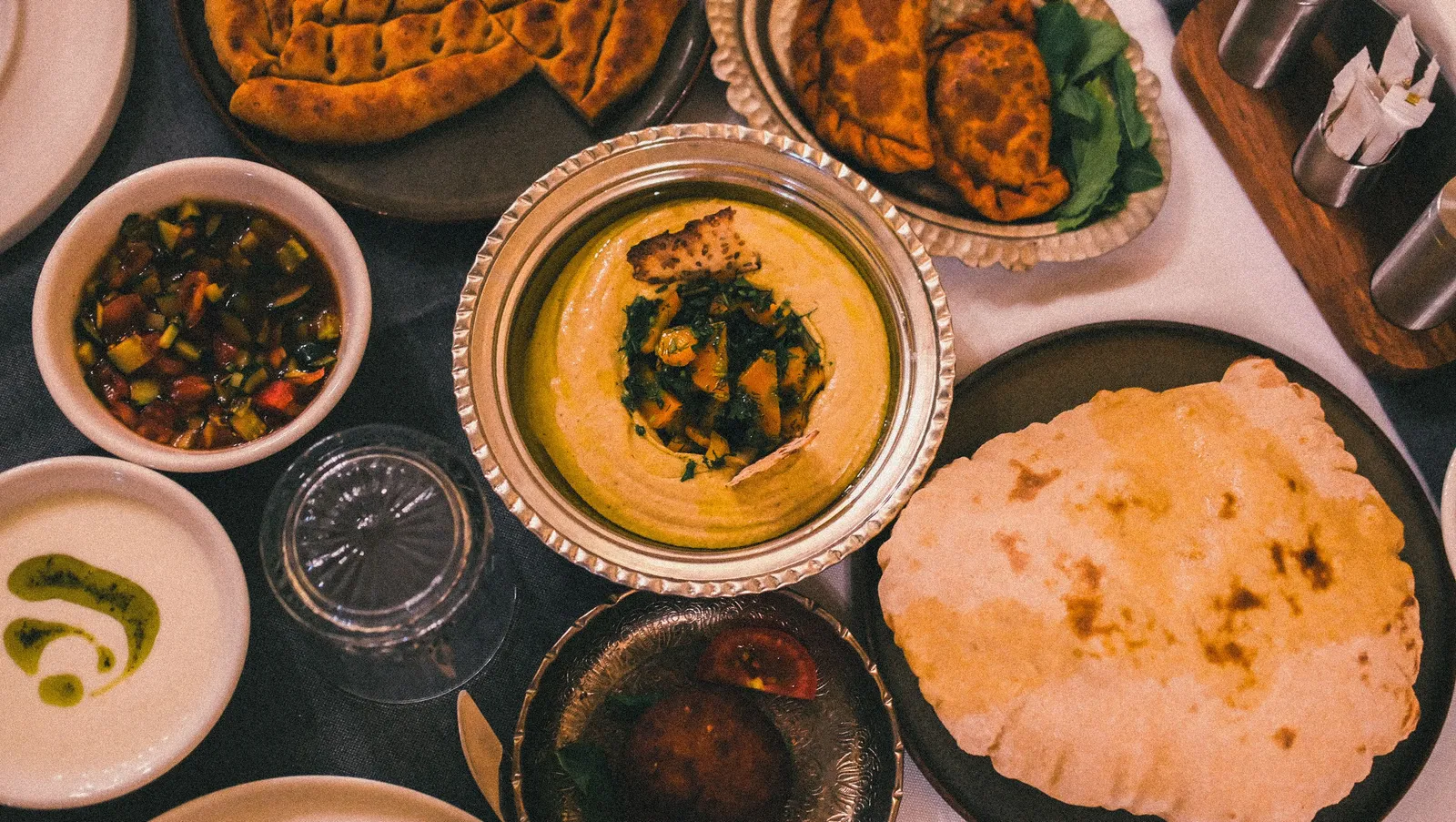
The restaurant line-up is the strongest reason to plan an evening rather than an hour. There is a long run of places along the waterways with terraces facing the Burj Al Arab, covering most cuisines and a wide range of formality, and several of them are properly good rather than merely well-located.
Prices are resort prices. This is a hotel complex and the bill reflects it.
Booking is sensible at weekends and around sunset, when the terrace tables go first and go early. Our guide to eating in Dubai covers where the Madinat sits against the rest of the city’s dining, and which neighbourhoods deliver better food for less if the view is not the point of your evening.
The abras, which are not the Creek abras
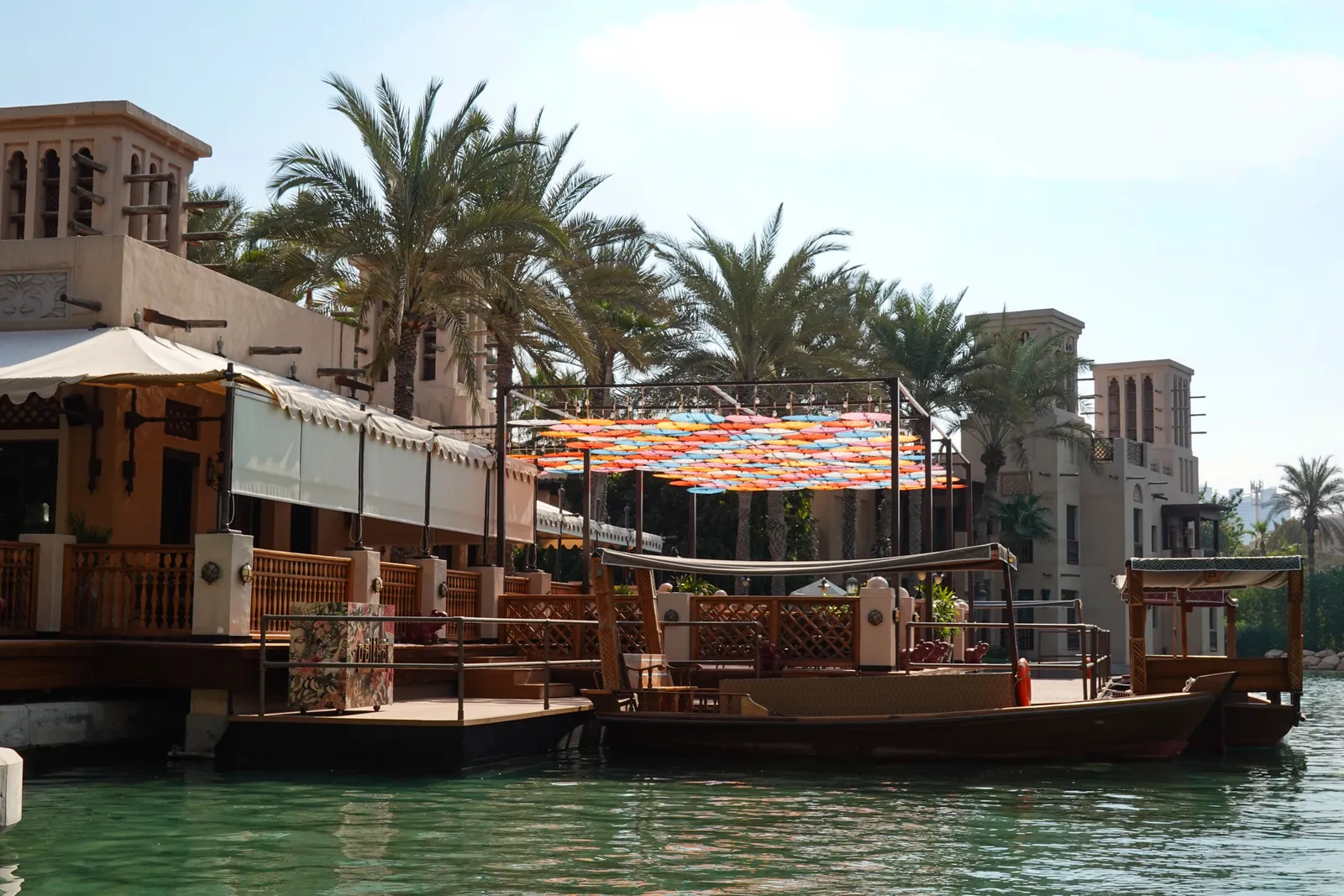
Small wooden boats run along the internal waterways of the complex, and a ride is ticketed and short.
Children love them and they are a lovely way to see the architecture from the water. They are also entirely artificial: a resort attraction on a man-made canal, not transport. The real thing, a working boat crossing a real creek for a coin, is a different experience altogether and is worth doing separately rather than instead.
Do both. They are not in competition and they cost almost nothing between them.
Where it fits in a trip
Souk Madinat Jumeirah is not a headline sight and does not need to be. It is one of the better free-to-enter evenings in the city, it solves the problem of what to do between a beach afternoon and dinner, and it is comfortable in a season when comfort is scarce.
Our guide to Dubai’s main attractions sets out the sights that do carry a ticket and what each is worth. The Madinat earns its place alongside them as the low-effort option: no booking, no queue, no entry fee, and a view that people pay for elsewhere.
In one line: go at five, walk the lanes, eat facing the Burj Al Arab, and buy your gold somewhere else.